You can manage client secrets using the Manage API Credentials page, where you can view, create, and delete client secrets.
To access the page:
credential manager) assigned by the WMDA team.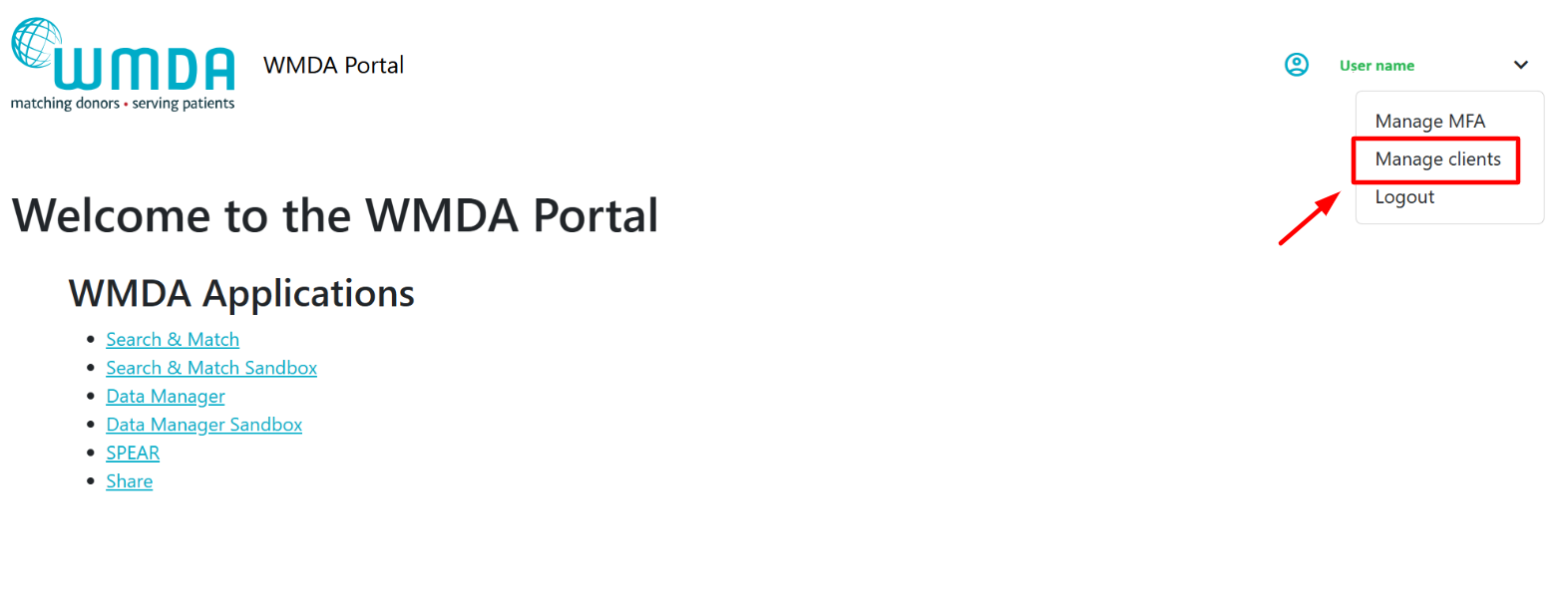
Your organisation should designate one or more technical contacts ( Only users with the Before contacting WMDA support, confirm internally who is responsible within your team. If access is required, contact WMDA: support@wmda.info |
As credential manager you can use the Manage API Credentials page to:
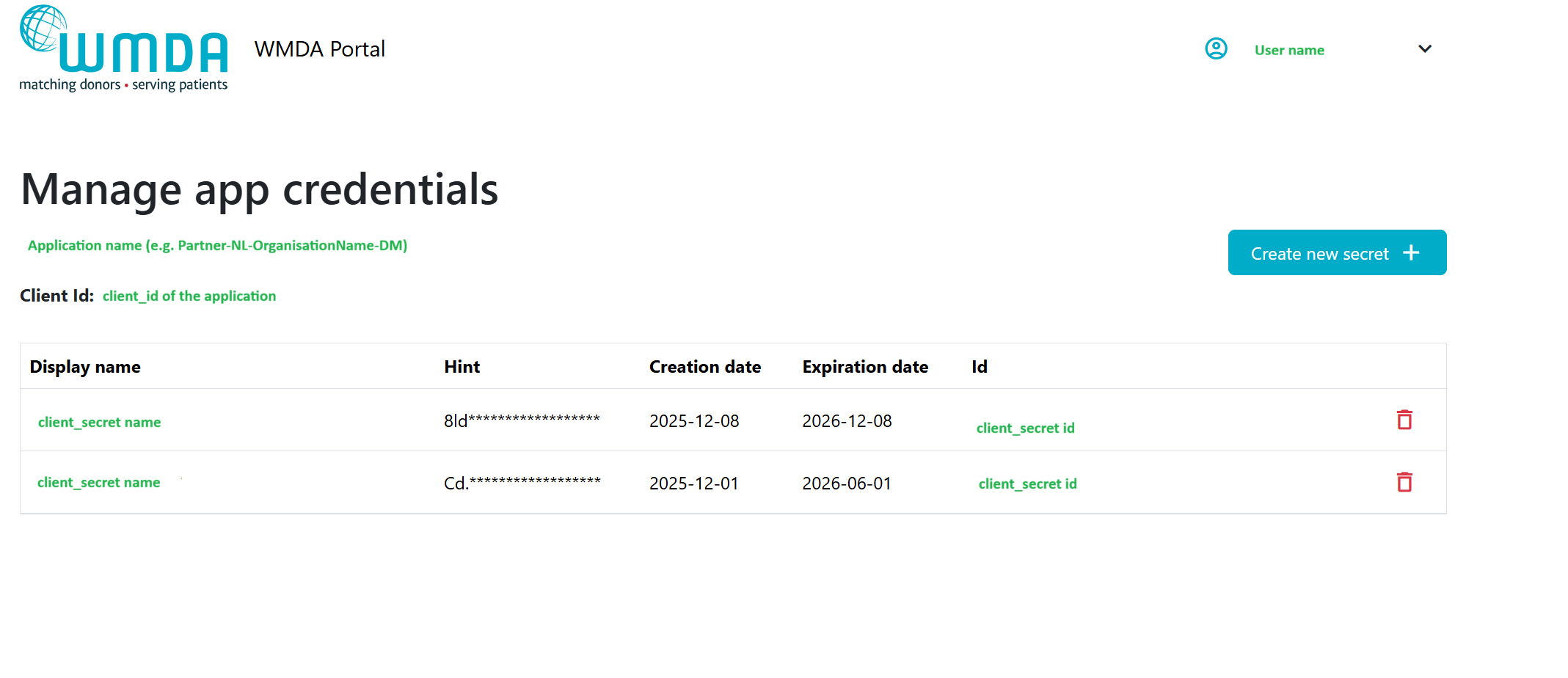
To create a new secret:
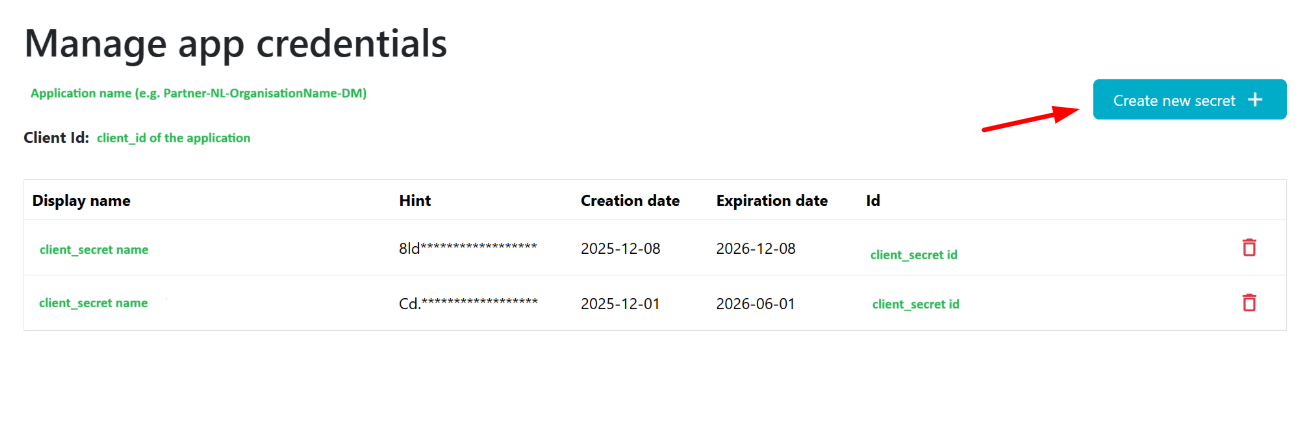
2. Provide client secret name and expiration date (1 year maximum) for this secret:
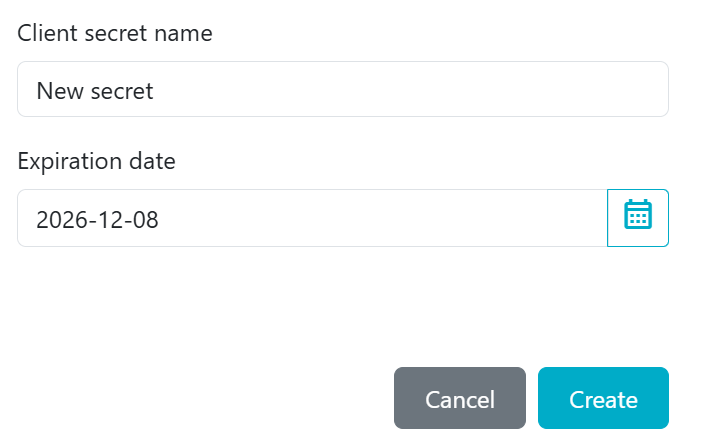
We advise including your name in the "client secret name" field (e.g., "Secret by VM") so the WMDA IT team can contact you if troubleshooting or follow-up is needed. |
3. Click on "Create".
4. Copy the client secret that appears:
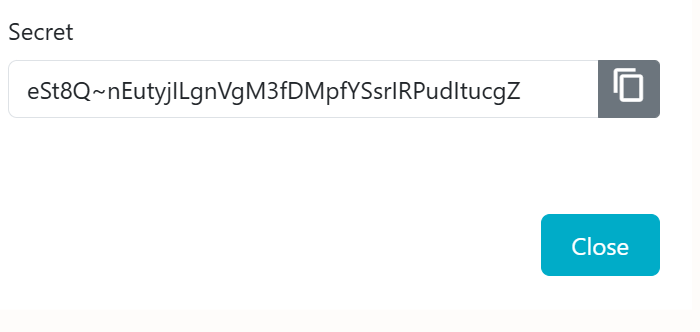
When you create a new secret, copy and store it securely. After you refresh or return to this page, the full secret will no longer be visible - only the first three characters (hint) will remain. If you don't copy the newly created secret, you lose it, and you'll need to generate a new secret. |
Once a new client secret is in use, the old one should be removed to prevent unnecessary expiration reminders and confusion.
To delete a secret:
1. Click on the delete icon next to the secret you would like to delete and confirm your action:
WMDA IT team creates applications for your organisation to facilitate the identification and procurement of stem cell products from around the world. To maintain secure access to these applications the WMDA provides the API Credentials (client ID and client secret) needed to connect to WMDA APIs. Each application has a client ID (which is permanent) and requires a client secret to authenticate.
To authenticate with WMDA APIs, a bearer token must be requested from the WMDA. For details on how client ID and client secret are used to retrieve bearer tokens and authenticate future requests to the WMDA API, see API authentication. |
Client ID
Client secret
Client ID stays the same permanently. It does not expire and does not need to be replaced. Client secret expires after a set period. When the client secret expires, API connections will stop working until a new secret is created and updated in your systems. To avoid interruptions, always rotate the secret before it expires. See 5. Email Notifications About Expiring Client Secrets below |
The Manage API credentials page lists the applications created by the WMDA IT team for your organisation. Each application represents access to one or more APIs.
Examples of applications you may see on the Manage API credentials page:
Partner-NL-OrganisationName-SMC
PartnerAlternative-NL-OrganisationName-SMC (sandbox only)
Applications naming convention follows this pattern: Partner-(Country Code)-(Organisation Name)-(API). Where:
Depending on the API permissions assigned to your application, it may have access to the following WMDA resources:
PartnerAlternative is a "dummy" organisation for implementers to test their Match-Connect API integration internally. It works only in the Match-Connect sandbox and is provided upon request. |
Each application has its own client ID and client secret. Visibility depends on your user role (see 3. Access to the Portal below) and the API permissions assigned to your application.
The designated contact(s) (credential manager) for your organisation will automatically receive email notifications from WMDA when a client secret is approaching expiration.
Notifications are sent at the following intervals:
These reminders are sent only to users who have the appropriate user role (credential manager) assigned by the WMDA team